
10 Mistakes to Avoid When Buying Cushions For Outdoor Furniture
Most people spend real money on outdoor furniture frames and then buy the cheapest cushions they can find. Six months later, the foam is flat, the fabric is faded, and the cushions are going in the bin. The frame is fine. The cushions failed because the wrong ones got bought in the first place. Choosing Cushions For Outdoor Furniture well isn't complicated, but it does require knowing where the common traps are.
Whether the space is a patio, deck, balcony, or garden, the decisions that determine how long cushions last have nothing to do with colour and everything to do with materials, construction, sizing, and fit for local conditions.
-
Focusing Only on Appearance
A cushion that looks good in a photo but isn't made for outdoor use is a waste of money, regardless of what it costs. Fabric designed for interior settings fades quickly under UV exposure, absorbs moisture in the first rain, and starts looking shabby within a season.
Style matters; nobody wants ugly cushions on their outdoor furniture but appearance needs to come alongside weather resistance rather than instead of it. The cushion that's still looking good in year three is the one that balanced both, not the one chosen purely because the colour worked.
-
Ignoring Local Weather Conditions
There's no single outdoor cushion that performs equally well everywhere. Climate determines what the cushion actually needs to handle, and buying without thinking about local conditions is one of the most common and most avoidable mistakes.
-
High rainfall areas need quick-drying materials that don't stay damp for days at a time
-
Strong sun regions require genuinely UV-resistant fabrics, not just UV-treated ones
-
Humid climates need mould-resistant construction that goes deeper than surface treatment
-
Coastal locations need materials that handle salt air without breaking down
A cushion that lasts five years in one climate might need replacing after two in another. Local weather conditions belong at the start of the buying decision, not as an afterthought.
-
Choosing the Wrong Cushion Size
Cushions that are too small make furniture look unfinished. Cushions that are too large create awkward seating that's uncomfortable to use. Both problems come from the same mistake, guessing at sizing rather than measuring.
Before buying, take actual measurements of the furniture:
-
Seat width
-
Seat depth
-
Backrest height
-
Required cushion thickness
Furniture sizing isn't standardised across manufacturers, so assuming a standard size will fit is a gamble that frequently doesn't pay off. Measure first, then shop. A properly fitted cushion looks deliberate and supports well. A poorly fitted one looks like an afterthought, no matter how nice the fabric is.
-
Buying Based Only on Price
Budget outdoor cushions are cheap because the materials are inferior. Low-density foam, weak stitching, minimal UV protection, and fabric that isn't genuinely suited to outdoor conditions are standard at the bottom of the market.
The economics work against this approach. A cushion replaced every season costs more over five years than a better one bought once. When looking for the best cushions for outdoor furniture, cost per year of use is the honest calculation, not the upfront price. Buying on price alone almost always means buying twice.
-
Overlooking Cushion Filling Quality
Most buyers look at fabric and design and ignore the filling entirely. That's backwards. The filling is what determines whether the cushion is comfortable to sit on and how long it stays that way.
Low-density foam compresses quickly and stays compressed. Within a season, it's providing minimal support, and the cushion feels like it's barely there. High-density foam holds its structure through regular use. Quick-dry foam handles the moisture exposure that outdoor cushions face without retaining water internally and breaking down.
Quality filling delivers:
-
A shape that holds across seasons rather than collapsing after a few months
-
Support that doesn't require constant adjustment or repositioning
-
Comfort that stays consistent rather than degrading quickly
-
Resistance to the compression that makes cheap foam useless
-
Not Checking Water Resistance Features
Outdoor furniture cushions are not automatically waterproof. The category includes everything from fully waterproof construction to barely water-resistant fabric that handles light misting and fails at anything heavier.
Mould and mildew almost always start with a cushion retaining moisture internally. Once that's established, it's very difficult to reverse. Checking the actual material specifications before buying shows what protection is actually on offer. "Water resistant" and "waterproof" describe different products with meaningfully different performance. Understanding that difference before purchasing prevents a lot of problems later.
-
Forgetting About UV Protection
Sun damage is gradual and irreversible. Fabric without proper UV protection fades, weakens, and cracks, and in sunny regions, that process happens faster than most buyers expect when they're standing in a showroom in winter choosing cushions for summer.
What sun damage looks like on unprotected outdoor fabric:
-
Colour fading and uneven bleaching
-
Surface brittleness and texture change
-
Cracking at seams and stress points
-
Structural weakening that reduces lifespan
UV-resistant materials maintain both colour and integrity significantly longer. In spaces with real sun exposure, which describes most outdoor areas through summer, this isn't a premium feature. It's a basic requirement.
-
Selecting the Wrong Cushion Thickness
Thickness is often chosen by eye rather than by sitting experience, which is how people end up with cushions that look fine and feel wrong. A cushion that looks substantial isn't necessarily one that supports well.
Thin cushions become uncomfortable during extended sitting as the furniture frame starts making itself felt through the foam. Excessively thick cushions alter seating posture and can make lower furniture awkward to use. The right thickness depends on furniture style, how the space is actually used, and how long people typically sit there. Sitting on display models before buying, or choosing retailers with genuine return policies, is worth the extra effort when thickness is genuinely hard to judge from a product listing.
-
Ignoring Maintenance Requirements
Every outdoor cushion needs cleaning. The question is how much work is involved. Some cushions are genuinely easy to maintain. Others require specialist cleaning products, hand washing, or treatments that turn basic upkeep into a significant task.
Features that make maintenance manageable rather than aspirational:
-
Removable covers that wash without fuss
-
Machine-washable fabrics that handle regular cleaning cycles
-
Stain-resistant treatments that make spills easy to deal with
-
Quick-drying construction that doesn't require extended drying time after washing
Buying cushions without thinking about how they'll be cleaned leads to one of two outcomes a lot of effort every season, or neglected maintenance that results in staining, mould growth, and early replacement.
-
Choosing Low-Quality Materials
Material choice affects durability, weather resistance, maintenance requirements, and long-term appearance. Picking the wrong material for the conditions is a reliable way to be disappointed, regardless of what the cushion costs.
Common outdoor fabric options:
-
Solution-dyed acrylic colourfast, genuinely UV-resistant, handles outdoor conditions well
-
Olefin is durable, moisture-resistant, and practical for high-rainfall areas
-
Performance textiles engineered specifically for outdoor use with varied properties
-
Polyester blends are widely available at varied quality levels across the range
-
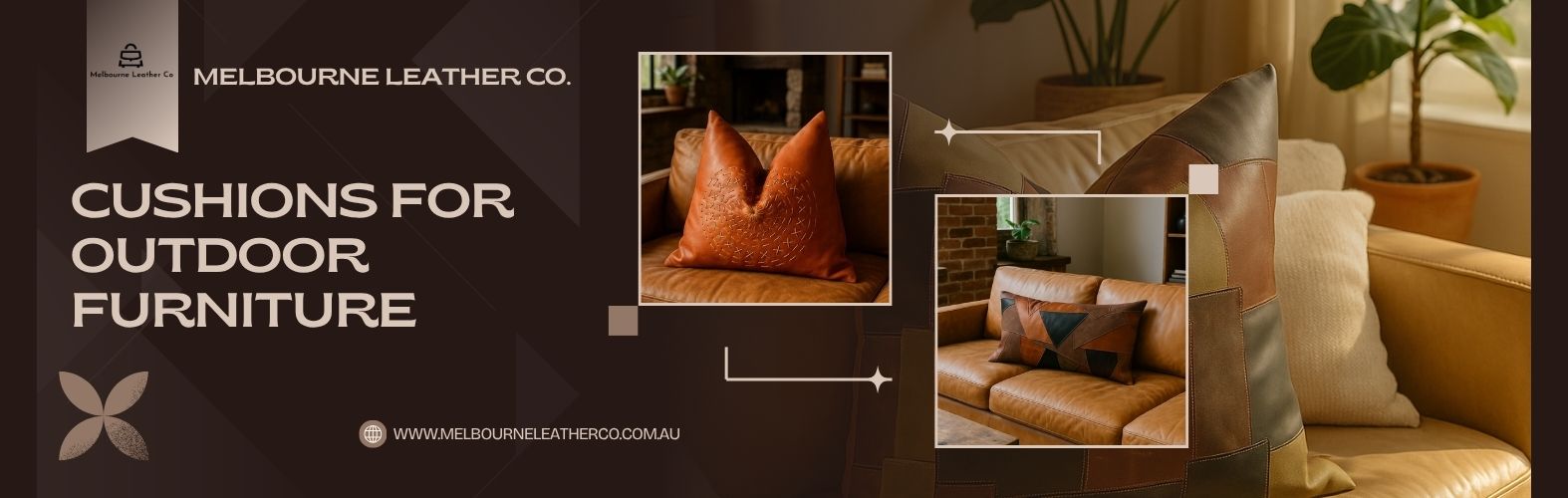
Premium leather cushions sophisticated appearance, best suited to covered outdoor spaces
Premium leather cushions work particularly well in sheltered outdoor areas, covered terraces, pergolas, enclosed patios where they're not exposed to direct rain. Properly maintained, they bring a level of quality and aesthetic that fabric alternatives in the same environment can't match.
How to Choose the Best Cushions for Outdoor Furniture

Before committing to a purchase, run through what actually matters:
-
Fabric durability against the specific conditions the cushion will face
-
UV resistance appropriate to the sun exposure in space
-
Water resistance matched to local rainfall and humidity
-
Filling quality and density, not just fabric grade
-
Maintenance requirements and whether they're realistic for regular upkeep
-
Sizing against actual furniture measurements, not assumed standards
-
Thickness relative to furniture style and how the space is used
-
Overall material quality against the price being paid
Outdoor cushions are a regular purchase for people who buy them incorrectly the first time. Buying them right once is considerably less expensive.
Conclusion
Getting Cushions For Outdoor Furniture right comes down to understanding what really affects comfort, durability, and long-term performance. Instead of focusing only on colour or price, it's important to consider factors like weather resistance, fabric quality, filling materials, UV protection, sizing, and overall construction. These are the features that determine how well outdoor cushions will hold up through regular use and changing outdoor conditions.
Most cushion problems are easy to predict and avoid. Fading, sagging, moisture damage, and loss of comfort usually happen when cushions are chosen for appearance rather than the environment they'll be exposed to. The cushions that last are the ones selected to match the conditions they will actually face, not just the way they looked in a product photo.
For anyone considering premium leather cushions for a covered outdoor space, Melbourne Leather Co offers a collection built around quality craftsmanship, premium materials, and lasting durability. Their designs are created to deliver comfort, style, and performance made to look good and stay that way for years.
FAQ’s
Q1: How long should good outdoor cushions actually last?
Three to five years, usually, if the climate's not brutal. Heavy sun or constant humidity, maybe two or three. If yours are dying way faster than that, it's the foam, or the fabric. Not bad luck.
Q2: What's the real difference between "water resistant" and "waterproof"?
Not the same thing at all. Water-resistant survives a bit of rain or dew, nothing heavy. Waterproof actually keeps water out. If you get proper rain where you live, "resistant" probably won't be enough.
Q3: Can leather cushions actually work outdoors, or is that a bad idea?
Under a roof, sure covered patio, pergola, anywhere rain doesn't hit directly. They do really well there, age nicely too. Out in the open though? No. Direct rain ruins them fast.
Q4: Is it worth spending more upfront on better cushions?
Pretty much always, yeah. Replacing cheap ones every year adds up to more than just buying one decent set. Plus you're not stuck shopping for cushions again every spring.
Q5: How do I figure out the right cushion size before buying?
Get a tape measure out. Seat width, seat depth, backrest height, and how thick you want it. Brands don't size things the same way, so don't guess measure first, then go shop.