
How to Identify a High-Quality Leather Bag Before You Buy
You can tell if a leather bag is good by checking a few simple things. Look at the type of leather it is made from. Check if the stitching is neat and even. Check if the hardware, like zippers and buckles, feels strong and heavy. Check how the straps are attached to the bag. Also check how the leather was treated during making.
Good bags use full-grain or top-grain leather. They have neat stitching with no loose threads. They use strong metal hardware, like brass. Their straps are attached firmly. Good leather is also treated using a natural method that helps it last longer.
Bags that skip these things often use fake or low-quality leather. They may have messy stitching. They may use light, weak hardware. These bags can look fine at first. But they often start falling apart within a year or two.
Knowing what to check makes buying a leather bag much easier. It helps you pick a bag that lasts a long time, instead of guessing and hoping for the best.
The Leather Bag Quality Checklist
-
Full-Grain Leather - The Most Important Decision You Will Make
Full-grain leather is the best kind of leather you can buy. It comes from the very top layer of the animal hide. Nothing gets sanded down or removed. This means the leather keeps all its natural strength. It also breathes better than other types. Over time, it gets a rich look called a patina. This makes the bag look even better as the years go by, instead of wearing out.
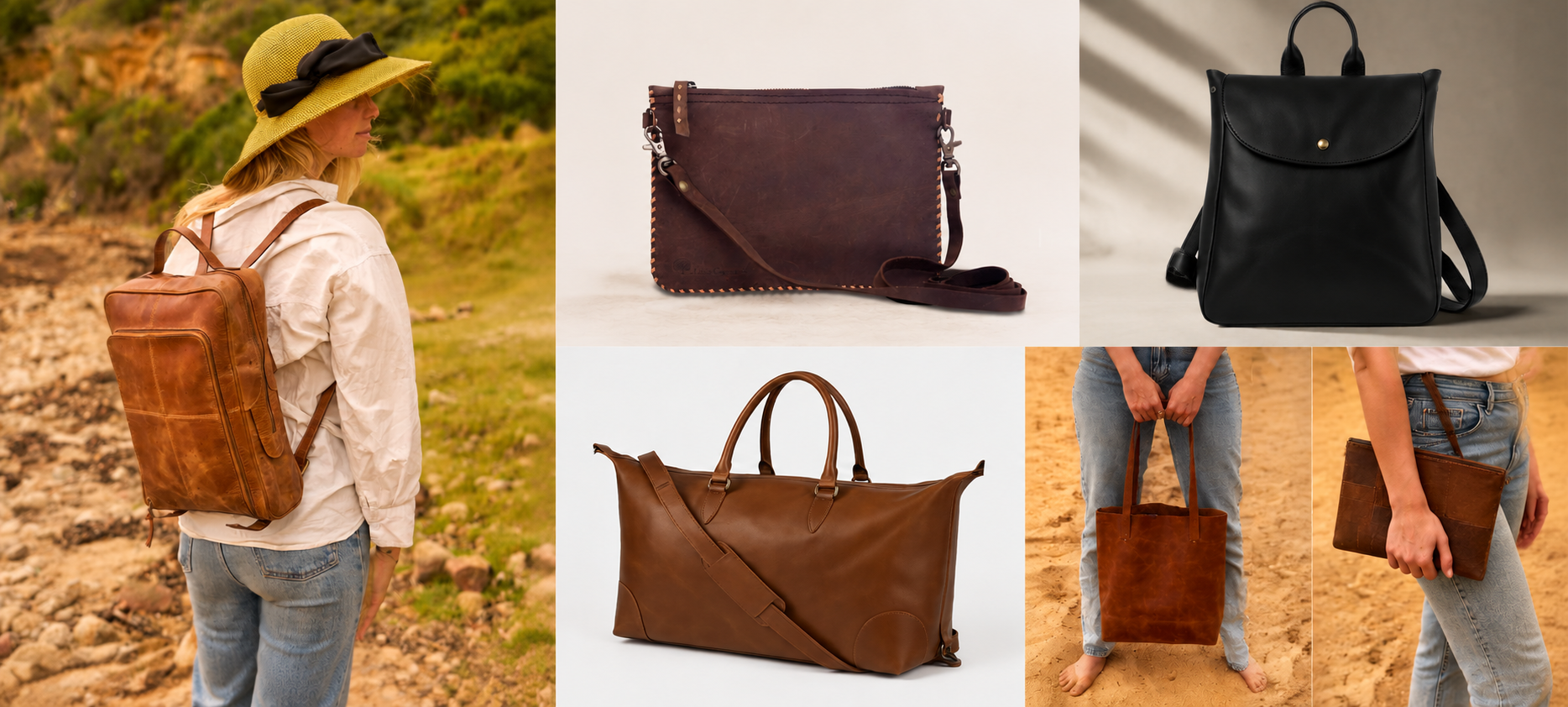
Products like the Large Leather Toiletry Bag Eve and the Elegance Brown Leather Tote Bag use premium cowhide leather built for daily use over many years. Understanding the grade before you buy a leather bag is what separates a genuine investment from an expensive mistake.
-
Natural Texture- a Sign of Quality
Real leather is never perfectly smooth. It has small bumps, lines, and slight colour changes across the surface. This is a good sign, not a flaw. It shows the leather is genuine and has not been heavily processed. Leather that looks too smooth and even has usually been sanded down and covered with a coating. That coating tends to crack and peel much sooner than real, natural leather.
-
Consistent Stitching
Good stitching tells you a lot about how carefully a bag was made. Every stitch should be the same length as the one before it. The lines should run straight, without wandering off to one side. There should be no loose threads anywhere on the bag. Messy, uneven stitching usually means the bag was made quickly, without much care, and it is often the first place the bag will start falling apart.
-
Durable Zippers
A strong zipper should slide open and closed smoothly every time. It should never catch, stick, or feel rough halfway through. Pulling on it should feel solid, not flimsy or loose. Zippers get used constantly, so a weak one is often the very first part of a bag to break, sometimes within just a few months of regular use.
-
Premium Hardware
Hardware includes things like buckles, clasps, and metal rings on a bag. Good hardware feels heavy and solid the moment you pick it up. Brass is commonly used on quality bags because it resists rust and holds up well for years. If the metal feels light, hollow, or is actually plastic, that is a clear warning sign that the bag was not built to last.
-
Reinforced Handles
Handles carry the full weight of everything inside a bag, every single day. On a well-made bag, the spot where the handle meets the main body gets extra stitching or extra reinforcement. This stops the handle from tearing loose after months of regular use. A bag without this kind of reinforcement often starts sagging or ripping at the handles much sooner than expected.
-
Functional Compartments
Good compartments actually make sense for how the bag gets used in real life. A laptop pocket should properly fit a laptop, without needing to force it in. A phone pocket should be easy to reach without digging through the entire bag first. Well-designed compartments keep everything organised throughout the day, rather than leaving everything jumbled together at the bottom.
-
Quality Interior Finish
The inside of a bag deserves just as much attention as the outside. A well-finished interior feels smooth, clean, and neatly put together. There should be no rough edges, loose threads, or unfinished seams hiding inside. A messy, poorly finished interior is often a sign that corners were cut somewhere else in the bag, too, even if the outside looks fine at first glance.
-
Design That Works in Real Life
A beautiful bag that does not function well for its intended purpose is not a good purchase. Style attracts attention. Usability determines whether the bag stays in rotation or ends up at the back of a wardrobe.
A work tote needs to fit a laptop and documents without making you dig around every time you need something. A commuter messenger bag needs an adjustable strap, a secure closure, and compartments that keep things in order throughout the day. Buy a leather bag for how you will actually use the bag, not just how it looks on a shelf.
Common Buying Mistakes

When buying a leather bag, it's easy to focus on the wrong things. Here are some of the most common mistakes to avoid:
-
Ignoring the type of leather: Terms like "genuine leather" or "best leather bag" don't always indicate the highest quality. Look for information about the leather type, such as full-grain, top-grain, or suede, to better understand its durability and finish.
-
Overlooking stitching and hardware: Even high-quality leather won't last if the stitching is weak or the zippers, buckles, and rivets are poorly made. Strong, even stitching and durable metal hardware are key signs of a well-crafted bag.
-
Choosing price over quality: The cheapest option often wears out much sooner, leading to frequent replacements. Investing in a well-made leather bag can save money in the long run because it is designed to last for years with proper care.
-
Not considering your daily needs: A stylish bag isn't always the most practical. Make sure it has the right size, compartments, and carrying style for how you'll actually use it every day.
Comparison: Premium vs Low-Quality Leather Bags
|
Feature |
Premium Leather Bag |
Low-Quality Leather Bag |
|
Leather Grade |
Full-Grain or Top-Grain |
Bonded or Synthetic |
|
Durability |
10+ Years |
1–3 Years |
|
Hardware |
Brass or Heavy-Duty Metal |
Lightweight Metal or Plastic |
|
Stitching |
Reinforced and Consistent |
Uneven and Weak |
|
Aging Process |
Develops Rich Patina |
Cracks and Peels |
|
Construction |
Handmade or Expertly Crafted |
Mass Produced |
|
Long-Term Value |
Excellent Investment |
Frequent Replacement |
Conclusion
Choosing the right leather bag is about more than just its appearance. The quality of the leather, strong stitching, durable hardware, careful tanning, and practical design all work together to determine how well the bag will last. Taking a little time to check these details before buying can help you make a confident choice and avoid costly replacements later. A well-made leather bag is not just a stylish accessory; it's a practical investment that offers lasting durability, everyday functionality, and timeless appeal for years to come.